
Short answer: A Brix to SG correction calculator is most useful when it is treated as an interpretation tool, not as a second sensor inside the refractometer. Before fermentation, a Brix reading from wort can be compared with a Brix-to-SG conversion. Once alcohol is present, the raw refractometer reading is affected and a correction method normally needs the original gravity or original Brix as context. The PAL-1 listing documents a Brix range, not an automatic SG mode or built-in brewing correction. Record the sample stage, use the calculator consistently and keep a hydrometer comparison available when the final decision matters.
Separate Brix from SG
Brix and specific gravity describe related but different ways of discussing a liquid. A Brix refractometer reads the optical response of the sample and presents a Brix value; a hydrometer is commonly used for SG. Before fermentation, a calculator can convert a Brix reading into an estimated SG for a sugar-containing wort, provided the scale and method are appropriate.
After fermentation begins, alcohol changes the relationship between the optical reading and gravity. Brewfather's refractometer documentation therefore treats fermented readings as requiring alcohol correction and original-gravity context. The important boundary is simple: do not copy a raw post-fermentation Brix number into a final-gravity field as though no other liquid component exists.
| Sample stage | Use of a Brix reading | Record before converting |
|---|---|---|
| Unfermented wort | Brix-to-SG estimate for recipe tracking | Brix, sample temperature and batch |
| Fermentation underway | Input to a correction method | Original gravity or original Brix plus current Brix |
| Finished beer | Cross-check or corrected estimate | Correction method and any hydrometer comparison |
Take a usable wort sample
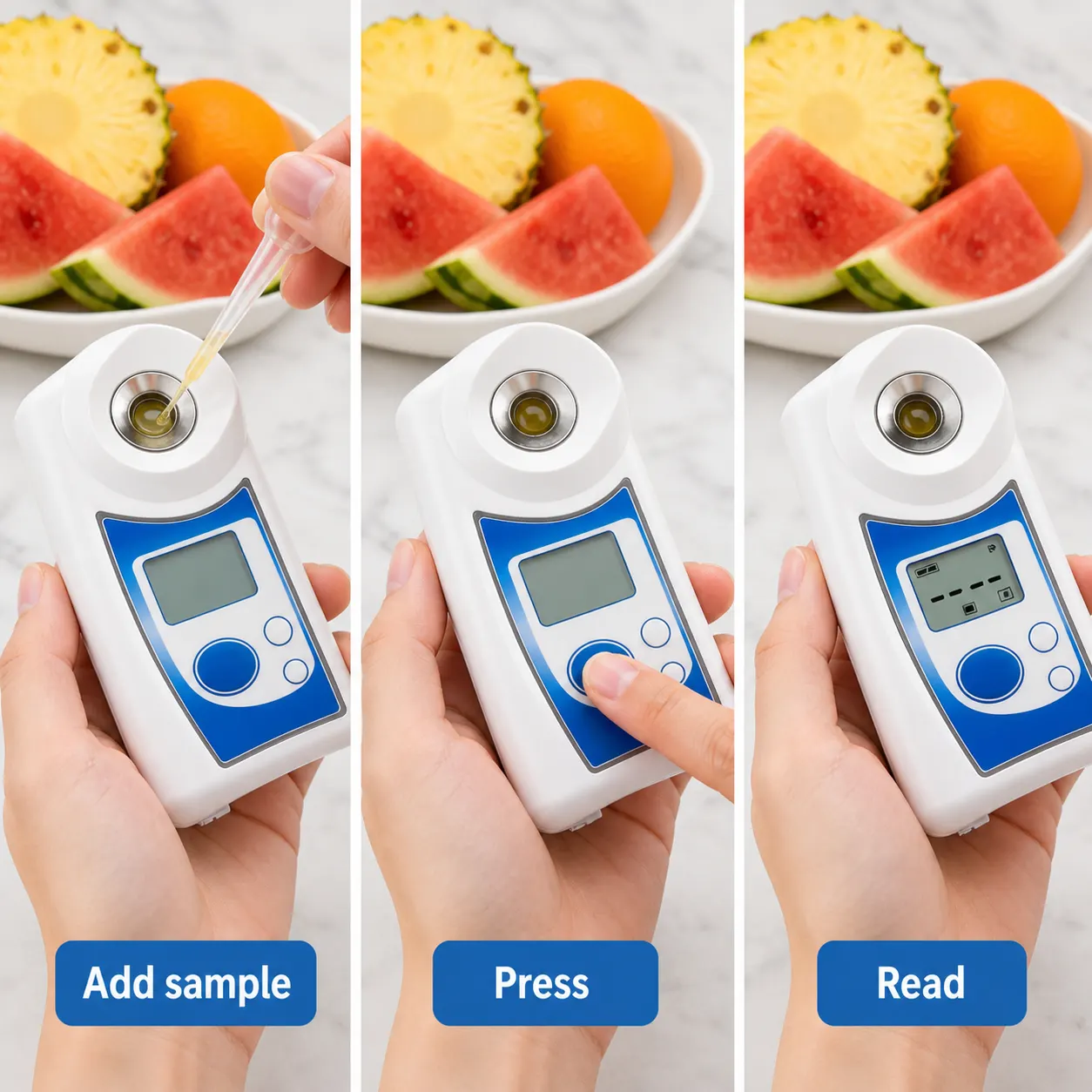
A calculator cannot repair a poor sample. Stir or mix the wort only in a way that fits your process, take a small portion without foam, and let the sample move towards the temperature recommended by the PAL-1 manual. Use the same sampling point and note whether the reading is pre-boil, post-boil or from the fermenter. The seller does not specify a required sample volume, so use the manual and instrument geometry rather than inventing one.
Zero-setting is part of the measurement record, not an optional story told after a surprising number. Use water as described in the manual, clean the prism, then take the Brix reading. If the liquid contains yeast, trub or heavy sediment, note that context and do not present the result as a universal property of the batch.
- Write down the batch stage and the original gravity or original Brix before fermentation starts.
- Zero-set the PAL-1 with water and prepare a representative, low-foam sample at a suitable temperature.
- Record the current Brix value exactly as displayed, including the date and sample stage.
- Use the same correction method each time and keep the input values with the calculated SG.
Use the calculator as context
For an unfermented wort, enter the Brix value into a trusted Brix-to-SG conversion using the unit convention it expects. For a fermenting or fermented sample, use a tool that explicitly asks for original gravity or original Brix and applies alcohol correction. Brewfather's documentation describes that distinction and also notes that a refractometer reads Brix while a hydrometer reads SG.
Do not report more precision than the instrument and method support. The storefront lists 0.1% Brix resolution and ±0.2% Brix accuracy; the calculator's extra decimal places are mathematical formatting, not evidence that the batch is known to that precision. If the result controls packaging or a safety-sensitive decision, confirm it with the method required by your process.
What the PAL-1 does not claim
The current product page describes a PAL-1 digital Brix refractometer with a 0.0-53.0% Brix range, LCD display, 0.1% resolution, ±0.2% accuracy and two AAA batteries. It does not list an SG scale, a brewing calculator, a built-in alcohol correction or a hydrometer replacement claim. Manufacturer does not specify those features on the seller's page.
That makes the purchase decision narrow and clear. Buy for a Brix reading and plan the conversion or correction outside the instrument. If your workflow requires a built-in SG result, a validated fermented-beer method, a certificate or a particular temperature protocol, check the documentation before ordering. A calculator is useful only when its inputs and limits are visible.
Related guides and product details
Use the PAL-1 for documented Brix readings, then keep stage, original gravity and correction method beside the calculated SG so the result remains auditable. Read Digital Brix Meter for Jam Making: Sample and Calibration Checks for related guidance. Read Refractometer for Home Brewing UK: A Careful Buying Guide for related guidance. Review the documented specification on the PAL-1 digital hand-held "pocket" refractometer, 0.0-53.0% brix product page before ordering.
Sources and safety context
- Supports the seller's published Brix instrument facts and the absence of an advertised SG correction mode. PAL-1 digital hand-held pocket refractometer product page.
- Supports zero-setting, sample handling and the Brix-scale measurement context. ATAGO PAL-1 Refractometer Instruction Manual.
- Supports the distinction between pre-fermentation conversion and fermented-reading alcohol correction. Brewfather refractometer documentation.